
JSON is the format nearly every digital integration uses to exchange data in 2026. When the Meta pixel sends a conversion, when ChatGPT returns a structured answer, when your CRM receives a lead from a form, when Google decides whether to cite your brand in an AI Overview — in every one of those cases, what travels between the systems is JSON.
A marketer who cannot read JSON in 2026 is like a finance professional who cannot read a balance sheet. You can still work, but you are hostage to whoever can read it. And in a field where most decisions depend on real-time data, hostage is expensive.
The good news: the name is scarier than the thing.
What JSON is, in one sentence marketing understands
JSON (JavaScript Object Notation) is a standardized way of writing structured data in plain text, organized into key and value pairs.
Think of a registration form: name, age, email, status. JSON is exactly that, in a format every digital tool — from Meta Ads to ChatGPT, from Google Analytics to Pipedrive — reads and writes without ambiguity.
A simple example, a lead arriving from your site:
{
  "name": "Ana Costa",
  "email": "ana@company.ca",
  "source": "google_ads",
  "campaign": "B2B-MQL-Apr26",
  "potential_value": 15000,
  "qualified": true
}
That is it. Text. With { } to open and close a record, : to bind a key (the field name) to its value, and , to separate fields. No magic, no hidden syntax. If you can read that, you are halfway there.
The anatomy of a JSON in 60 seconds
JSON has only 6 data types. They all fit in one diagram:
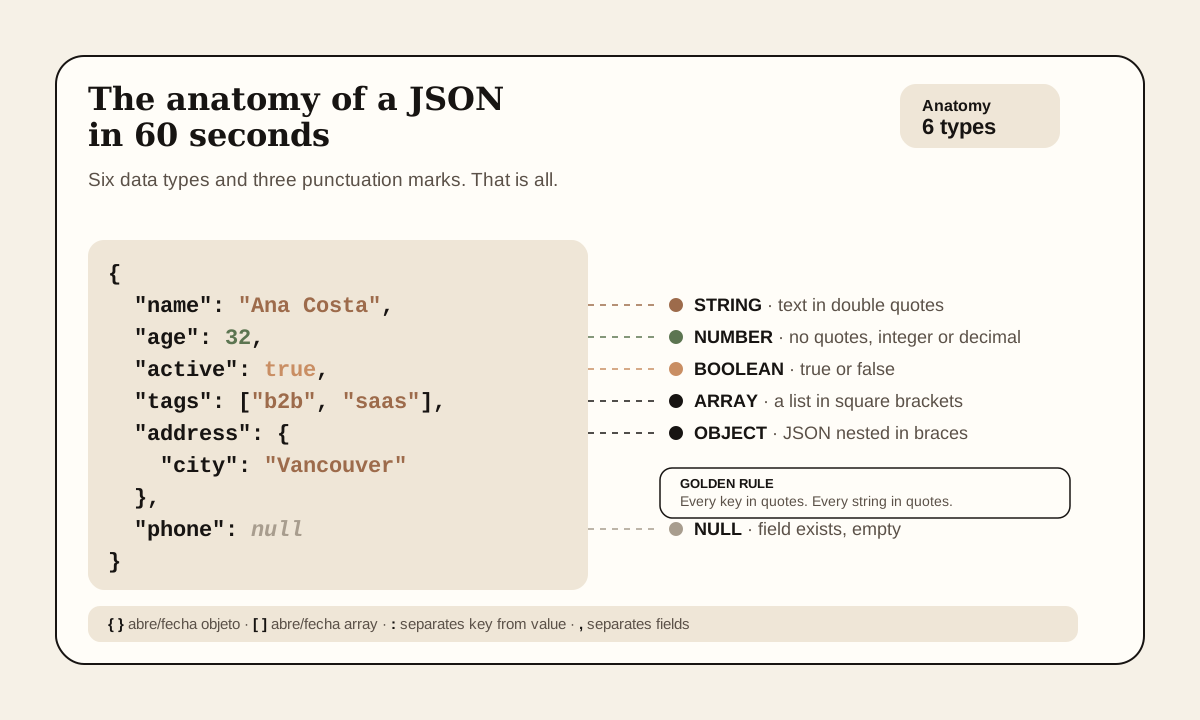
- String: text in double quotes.
"Ana Costa" - Number: no quotes.
15000or2.5 - Boolean:
trueorfalse. No quotes. - Null: the field exists but is empty.
null - Array: a list of items in square brackets.
["facebook", "google", "linkedin"] - Object: another JSON inside the JSON, in braces.
{ "address": { "city": "Vancouver" } }
The golden rule: every key goes in quotes, every text value goes in quotes, every number, boolean or null goes without quotes. Anyone who has debugged a payload knows 80% of errors are a forgotten quote mark.
Why JSON won (and CSV and XML lost)
Marketing has dealt with CSV (the spreadsheet exported from GA or Meta Ads Manager). And anyone who worked in e-commerce in the 2010s ran into XML (old product feeds, SOAP APIs).
JSON became the standard for three practical reasons:
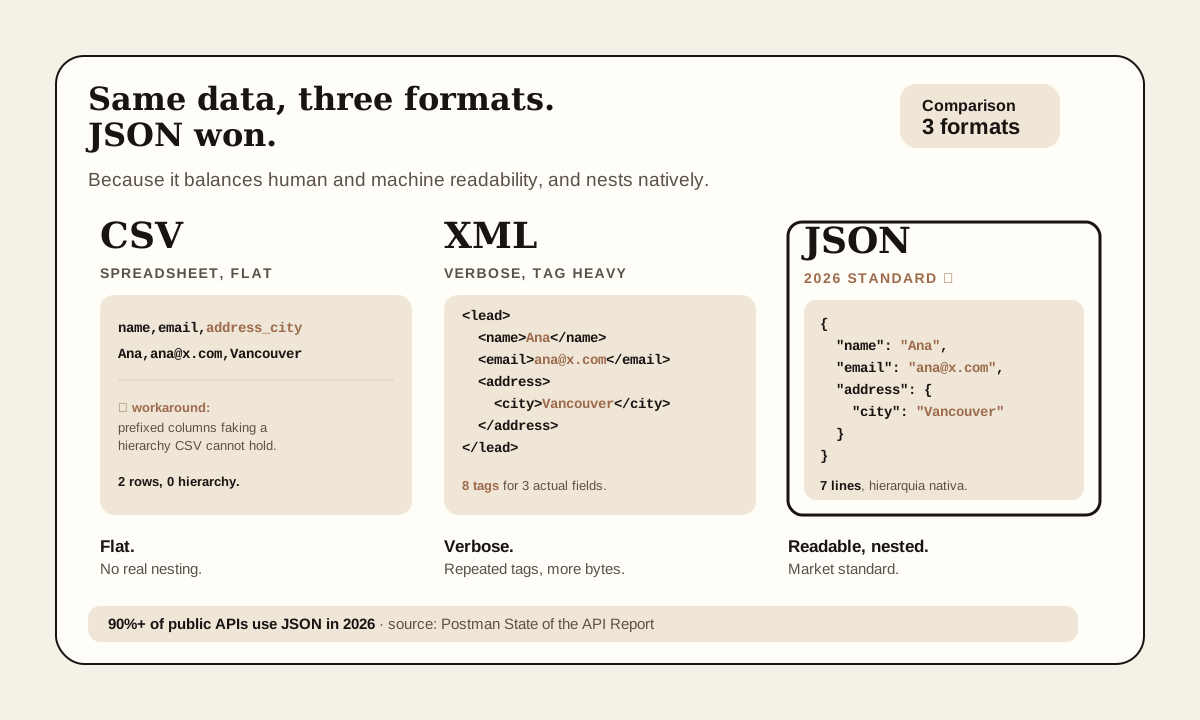
- It supports nested structure. A lead has an address, which has a city, which has a neighbourhood. CSV cannot represent that without turning into a Frankenstein of columns. JSON handles it natively.
- It is readable by humans and machines. XML was too, but with 40% more characters and repeated tags that muddy the read.
- Every modern language speaks JSON natively. No special parser, no exotic library, no converter. You open it, read it, write it.
In 2026, more than 90% of public APIs use JSON as their default response format, according to the Postman State of the API Report. That is not hype. It is infrastructure.
Where marketing already meets JSON without knowing
Before the pillars, a quick map. You very likely ran into JSON in the last 30 days in at least 3 of these:
- GA4 / GTM events (the
dataLayeris JSON) - Meta pixel and Conversion API (every event is a JSON payload)
- Webhooks from HubSpot, Pipedrive, ActiveCampaign, Salesforce
- Responses from Zapier, Make, n8n
- Structured outputs from ChatGPT, Claude, Gemini
- Schema.org / JSON-LD (the little code block that makes Google understand your page)
- Campaign configuration through the Google Ads or Meta Marketing API
- Programmatic bidding (OpenRTB is 100% JSON)
- Headless CMS (Contentful, Sanity, Strapi deliver everything in JSON)
- Lottie (modern web and app animation is pure JSON)
Now the 3 places where not knowing JSON genuinely costs money.
Pillar 1: Meta CAPI and GA4 — every server-side event is JSON
The death of the third-party cookie pushed the whole market toward server-side tracking. Meta Conversion API, Google Enhanced Conversions, GA4 Measurement Protocol — all of them expect you to send events straight from your server, in JSON.
Here is a real conversion event arriving at Meta CAPI:
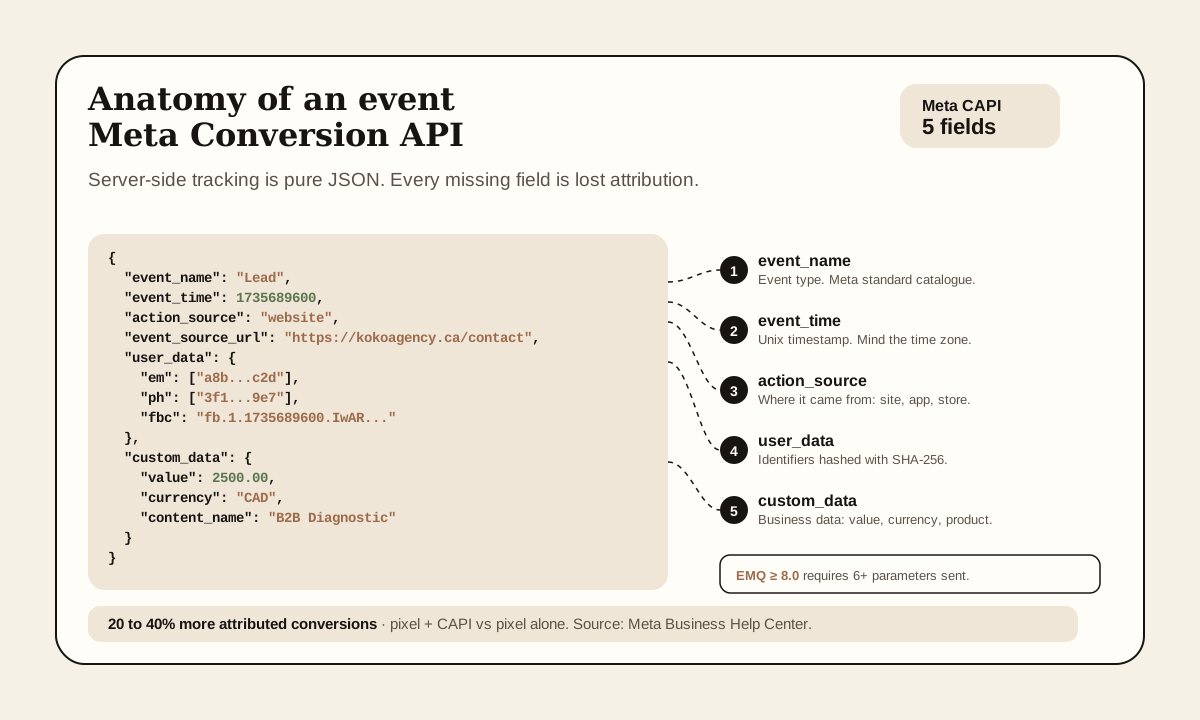
{
  "event_name": "Lead",
  "event_time": 1735689600,
  "action_source": "website",
  "event_source_url": "https://kokoagency.ca/contact",
  "user_data": {
    "em": ["a8b...c2d"],
    "ph": ["3f1...9e7"],
    "fbc": "fb.1.1735689600.IwAR..."
  },
  "custom_data": {
    "value": 2500.00,
    "currency": "CAD",
    "content_name": "B2B Diagnostic"
  }
}
What changes when you can read this:
- Conversions disappeared after a site change? You open the event, check whether
event_source_urlis coming through correctly, whetherfbc(the Facebook cookie) is present, whethervaluearrived with the right decimal. A 2-minute diagnosis instead of 2 days of email with the agency. - Negotiating with a server-side tracking vendor? You can judge whether the proposed integration covers the right fields, or whether they are handing you a Lego set with pieces missing.
- Data quality audits stop being "I trust what GA shows me" and become "I look at the raw payload and validate at the source".
According to the Meta Business Help Center, Conversion API integrations carrying at least 6 of the 8 recommended parameters (including em, ph, fbc and external_id) deliver EMQ above 8.0 and 20-40% more attributed conversions compared to the pixel alone. EMQ is the grade; the JSON payload is the report card.
Pillar 2: AI speaks JSON (function calling and structured outputs)
This is the point that will weigh most over the next 12 months.
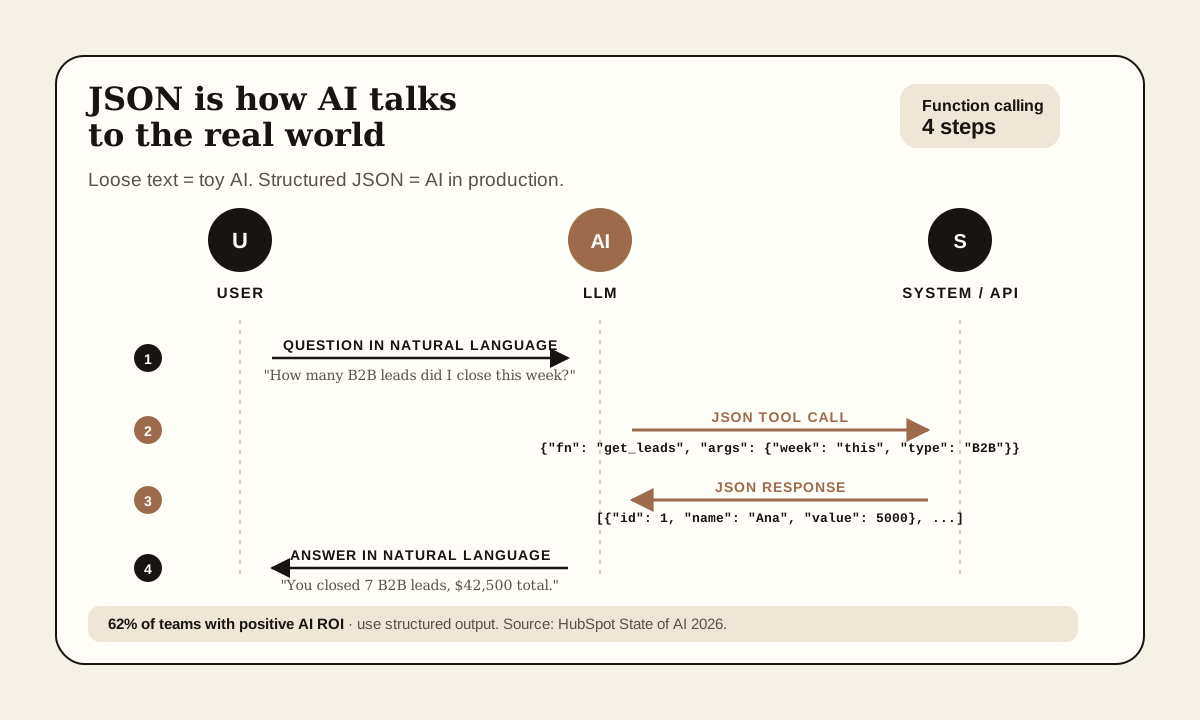
When you use ChatGPT, Claude or Gemini to generate text, the output is loose prose. Good for humans, bad for automation. Anyone putting AI into production found out fast that loose text does not scale — you cannot get Zapier or n8n to process "a creative answer that might come back in any shape".
The fix is asking for the answer in JSON with a defined structure. LLM vendors call this structured outputs or function calling.
A practical example: you want an AI to read 1,000 product reviews and classify each one. Instead of asking "tell me if the review is positive or negative", you ask for:
{
  "review_id": "rev_84512",
  "sentiment": "positive",
  "score": 0.87,
  "themes": ["fast_delivery", "packaging_quality"],
  "needs_attention": false
}
Done. Now you drop it into a spreadsheet, a dashboard, an automation that fires a message on negative reviews. JSON is what separates "demo-toy AI" from "AI running in production and generating ROI".
What changes when marketing understands this:
- You can write a technical brief for an automation specialist without losing it in translation. "I want the AI to always return JSON with these 5 fields" is an executable instruction. "I want the AI to classify" is vague.
- You judge AI tools on what matters: can you or can you not extract usable data? If the tool only returns prose, it does not fit a stack. If it returns structured JSON, it becomes an operational part.
- You prototype flows on your own. Paste a JSON payload into ChatGPT, ask for 50 test variations, open it in Make or Zapier, fire the email. No squad required.
According to HubSpot's State of AI in Marketing 2026, 62% of marketing teams reporting positive AI ROI use flows with structured output, against only 18% of teams using AI just to generate free text. The difference is not the AI. It is the JSON.
Pillar 3: JSON-LD — the JSON that gets AI to cite your brand
This pillar ties straight into GEO (Generative Engine Optimization).
JSON-LD is a Schema.org standard (Google's official recommendation) for describing your page content in structured JSON. You paste a block like this into the <head> of the HTML:
{
  "@context": "https://schema.org",
  "@type": "Article",
  "headline": "What JSON is and why marketing needs to understand it",
  "author": {
    "@type": "Person",
    "name": "Murilo Souza",
    "jobTitle": "Martech Specialist"
  },
  "datePublished": "2026-04-29",
  "publisher": {
    "@type": "Organization",
    "name": "Koko Agency",
    "url": "https://kokoagency.ca"
  }
}
Users never see it. But the crawlers from Google, Bing, ChatGPT, Perplexity and Gemini all read it.
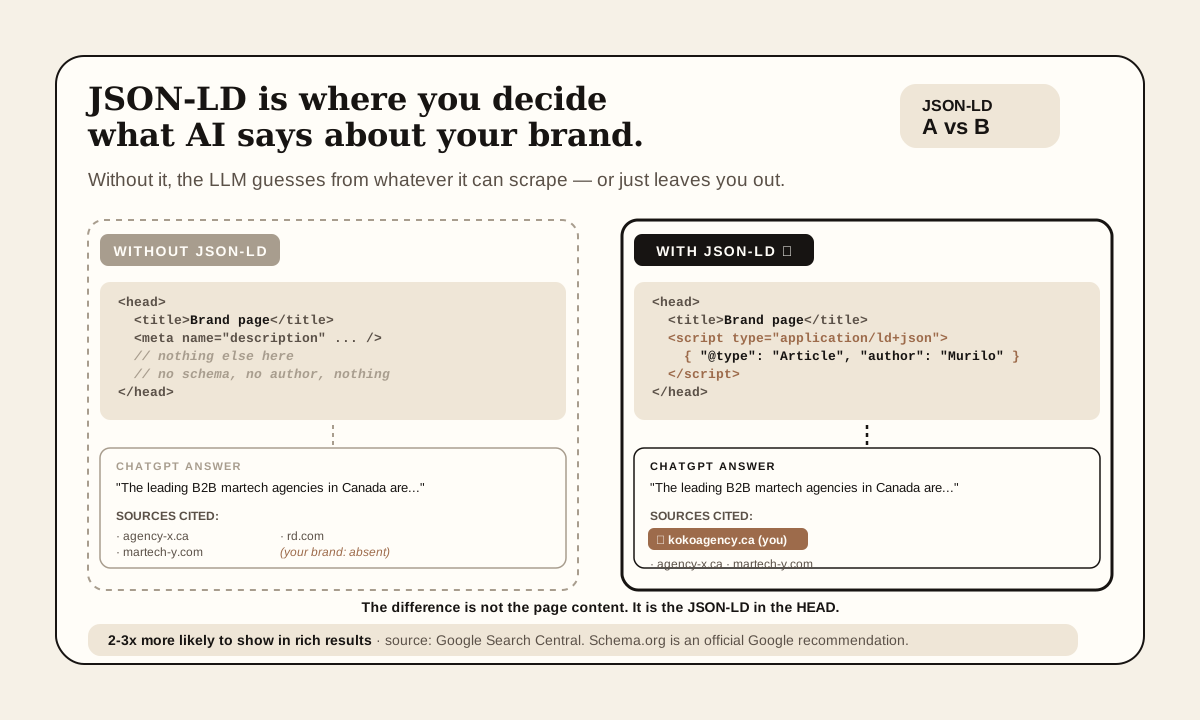
The practical effect: pages with solid JSON-LD are 2-3x more likely to appear in Google rich results (per Google Search Central) and are significantly more cited by AI Overviews and ChatGPT (per Princeton and Penn State analyses of which sources LLMs prefer).
In B2B, that becomes pipeline. If ChatGPT cites Koko when somebody asks "who are the best martech agencies in Canada in 2026", that citation reaches the buyer before any media spend does. JSON-LD is the door to that citation.
And the detail few teams notice: JSON-LD is where you decide what AI says about your company. It is all there, in structured text, feeding the model. If you did not write it, the model will guess from whatever it can scrape — or simply leave you out.
Bonus: image to design tokens via JSON
One of the newest and prettiest applications closes the loop between design and code, with JSON in the middle.
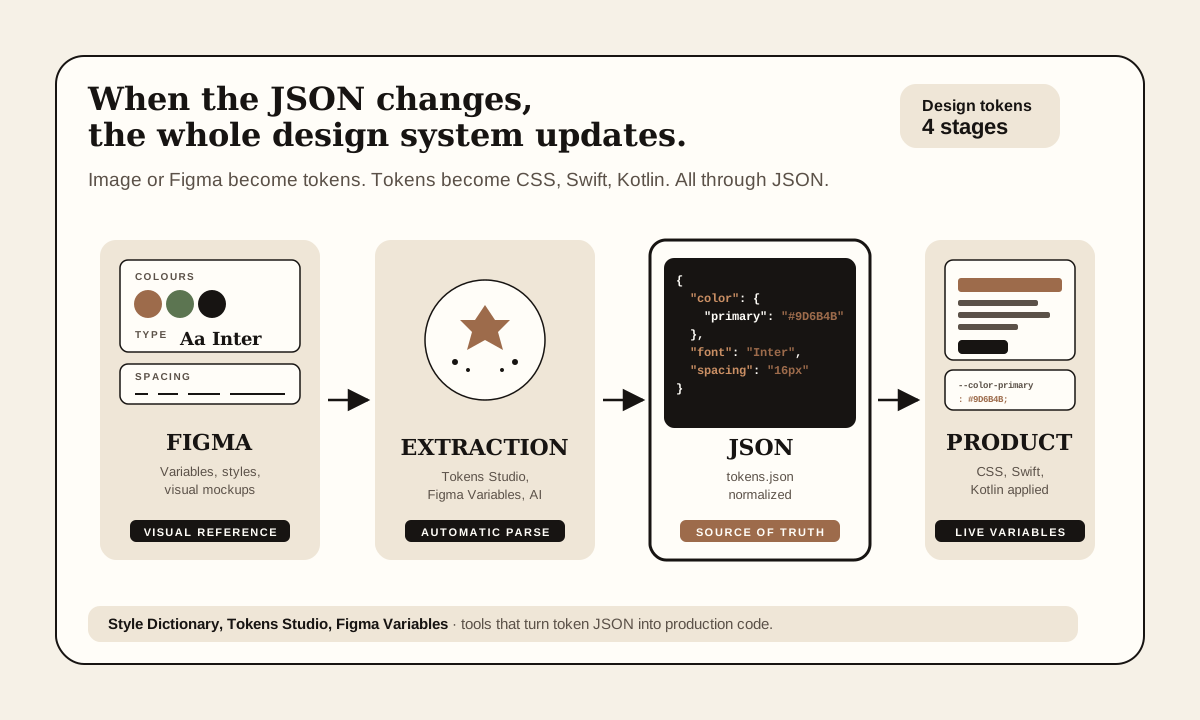
The modern flow (2026):
- The designer hands over Figma with Variables, or you photograph a visual reference
- An AI tool extracts colours, typefaces and spacing into a design tokens JSON
- Style Dictionary, Tokens Studio or similar turns that JSON into CSS, Swift, Kotlin
- The product team consumes it through variables, with nobody opening Photoshop
The result: a design system that updates itself when the JSON changes. Marketers who understand this negotiate better with product and production, know what to ask for, and stop being hostage to "it depends on the dev".
3 situations where marketing stalls for not reading JSON
To close the argument: three real scenarios I see constantly.
1. "Conversions disappeared, and the agency says everything is fine."
The team opens GTM, opens GA4, opens Meta Events Manager, and nobody looks at the raw payload. In 8 out of 10 cases the error is one JSON field (value arriving as a string instead of a number, currency missing, event_time in the wrong time zone). Someone who reads JSON solves it in 5 minutes.
2. "The AI is hallucinating, we should probably give up."
The AI is not hallucinating — it is returning creative prose when it should be returning structured JSON. Swapping "classify this for me" for "return this to me as JSON with fields X, Y, Z" changes the game. That is the difference between toy AI and production AI.
3. "Our competitor shows up in ChatGPT and we do not."
Inspect their HTML. There is well-built JSON-LD, with @type, author, aboutPage, mainEntity declared. Inspect yours. Nothing there, or just the basics from an SEO plugin. JSON is what separates who gets cited from who gets ignored.
How to start reading JSON in 10 minutes (without becoming a dev)
A practical recipe you can run today:
- Install the "JSON Viewer Pro" extension in Chrome. When you open an API URL, it formats the JSON in colour and makes it navigable.
- Use jsonlint.com or jsoncrack.com as a validator. Paste a payload, it flags errors and shows the structure visually.
- Open the Inspector (F12) on your own home page. Go to "Elements", search for
application/ld+json. You will see your page's JSON-LD, or the absence of it. - In Meta Events Manager, click "Test Events" and look at the raw payload. Start reading field by field. Within a week you read it fluently.
- Paste a JSON into ChatGPT and ask: "explain each field in this JSON as if I knew nothing". Fast learning with an on-demand translator.
You do not need to become a developer. You need to become a reader.
FAQ
What is JSON? JSON (JavaScript Object Notation) is a standardized text format for exchanging structured data between systems. It is the dominant format in APIs, marketing integrations, tracking events, AI responses and structured data for SEO in 2026.
Does a marketer need to learn to code to understand JSON? No. You need to learn to read JSON, not to write it. Ten minutes with an online validator (jsonlint, jsoncrack) and a browser extension already covers 80% of day-to-day cases.
What is the difference between JSON, XML and CSV? CSV is a simple spreadsheet (rows and columns, no nesting). XML uses tags like HTML and is more verbose. JSON is lighter, nests natively and became the standard for modern APIs. In 2026, more than 90% of new integrations use JSON.
Is JSON secure? Can I send sensitive data in JSON? JSON is only a format — security depends on the channel (HTTPS), the authentication (tokens, OAuth) and hashing of sensitive data. In Meta CAPI, for example, email and phone travel in JSON, but hashed with SHA-256 before sending.
How do I open a JSON file? In any text editor (Notepad, VS Code, TextEdit). But to view it formatted, use jsonlint.com, jsoncrack.com or the JSON Viewer Pro extension in Chrome.
Will AI write JSON for me? Yes, and it is good at it. Paste a JSON into ChatGPT or Claude and ask it to generate variations, add fields, validate structure or explain each part. For structured outputs, use the API's "function calling" or "JSON mode".
What is JSON-LD and why does it matter for SEO? JSON-LD is the Schema.org standard for describing page content in structured JSON. Pages with solid JSON-LD are 2-3x more likely to appear in rich results and are significantly more cited by AI Overviews and ChatGPT.
Conclusion
JSON is not a developer topic. It is operational literacy for marketing in 2026.
People who understand JSON debug campaigns without depending on the agency, validate conversion integrations at the source, write executable briefs for automation, read AI responses independently, and control what ChatGPT says about the brand through JSON-LD.
People who do not stay hostage to translation — and in a field where decision speed became the competitive advantage, hostage is the first role to go.
The good news: the learning curve is hours, not months. Quotes, braces, colons, commas. That was it.
Read next
- GEO: how to get your brand cited by ChatGPT and Google AI in 2026
- Search Console now measures Instagram, TikTok, X and YouTube
- How AI is replacing traditional CRMs for B2B companies in 2026
- Custom software vs. off-the-shelf in 2026
Sources and references
- Meta Business Help Center - Conversion API Best Practices
- Google Search Central - Structured Data / JSON-LD
- Schema.org - Official Specification
- OpenAI - Structured Outputs Documentation
- Anthropic - Tool Use with Claude
- Postman - State of the API Report 2025
- HubSpot - State of AI in Marketing 2026
- Style Dictionary - Design Tokens Specification
- W3C - JSON-LD 1.1 Recommendation
This is Koko's point of view on why competent martech in 2026 starts with understanding the format everything talks in.