
If you want ChatGPT to cite your company when someone asks "who are the best martech agencies in Canada", the path is writing content the AI can extract, building brand authority off your own site, and showing up in the sources these models read. There is no "advertise on ChatGPT" button (yet), no Google Ads for a generative answer. What exists is a set of practices that raises the odds of your brand becoming one of the cited sources. This guide is the step by step.
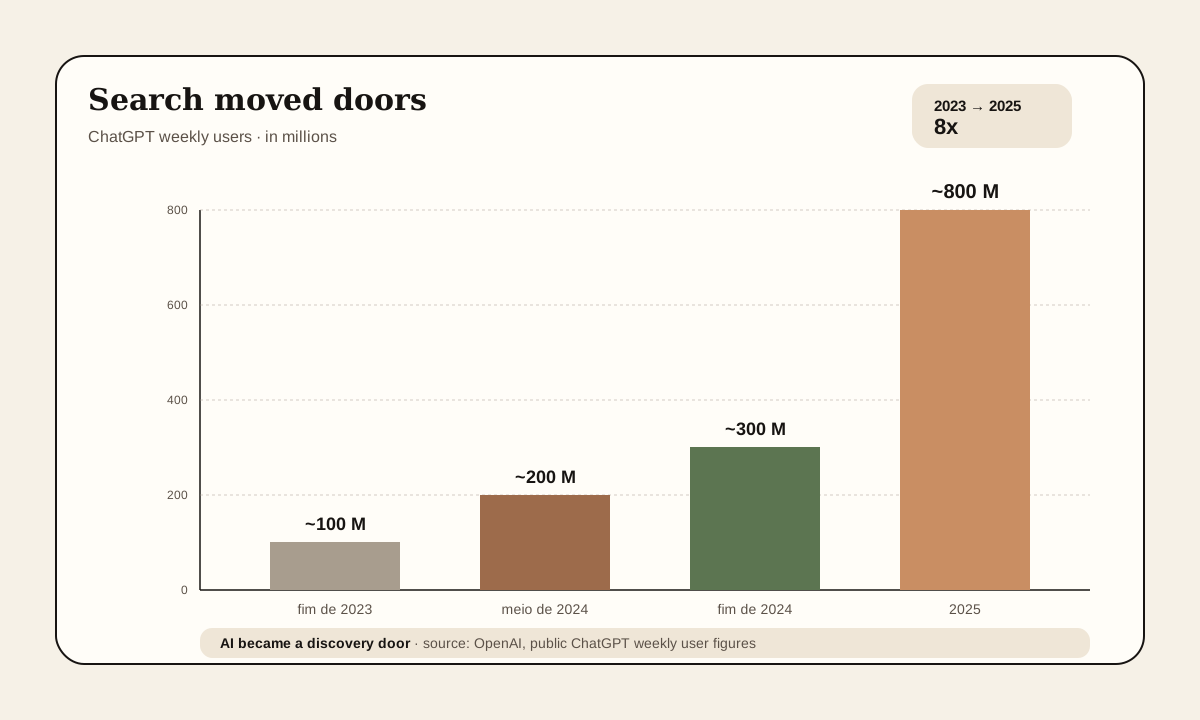
Search moved doors. For years, a search started by typing into Google and clicking one of ten blue links. Today a good share of questions end before the click: the person reads the answer ChatGPT, Perplexity or Google's AI Overview assembled, and moves on. Google did not disappear. It just stopped being the only place the decision happens.
OpenAI says ChatGPT went from roughly 100 million weekly users in late 2023 to around 800 million in 2025. Google's AI Overviews shipped in more than 100 countries and reaches over 1 billion people a month, by the company's own account.
We already wrote the conceptual side of this in the GEO post. This one is its practical sibling: less theory, more of what to do on Monday morning.
How to appear in ChatGPT, in one sentence
To appear in ChatGPT you need three things at the same time: structured content that answers the question in an extractable way, brand authority the AI recognizes (mentions on other sites, name consistency, presence in trusted sources), and presence in the places models use as sources, like Reddit, YouTube and comparison pieces. Miss one of the three and the citation stays fragile.
The rest of this article unpacks each one. First, it helps to understand how AI decides who makes the answer.
How an LLM picks who to cite
When you ask ChatGPT something with search active (or Perplexity, which always searches), it does not invent the answer out of nothing. It runs a search, reads a handful of pages and assembles the answer by picking passages from some of them. Which ones make it through a few filters:
- Source authority. A site that is already a reference on the subject, with a track record and links from elsewhere, gets priority. It is the same E-E-A-T Google uses, now applied to AI.
- A direct, extractable answer. If the passage that answers the question sits right at the top, in plain language, the AI copies it. If it is buried in paragraph seven after a lot of throat-clearing, it gives up and takes someone else's.
- Citable data. A specific number with context ("agency retainers in Metro Vancouver run between $3,000 and $30,000 CAD a month") becomes a citation. A vague line ("pricing varies a lot") becomes nothing.
- Entity consistency. If your brand name, address and description match everywhere (site, LinkedIn, Google Business, Wikipedia where it fits), the model trusts that "Koko" is a real entity and knows what it does. A messy name confuses it.
- Freshness. Content with a recent date and current information beats a 2019 page nobody updated.
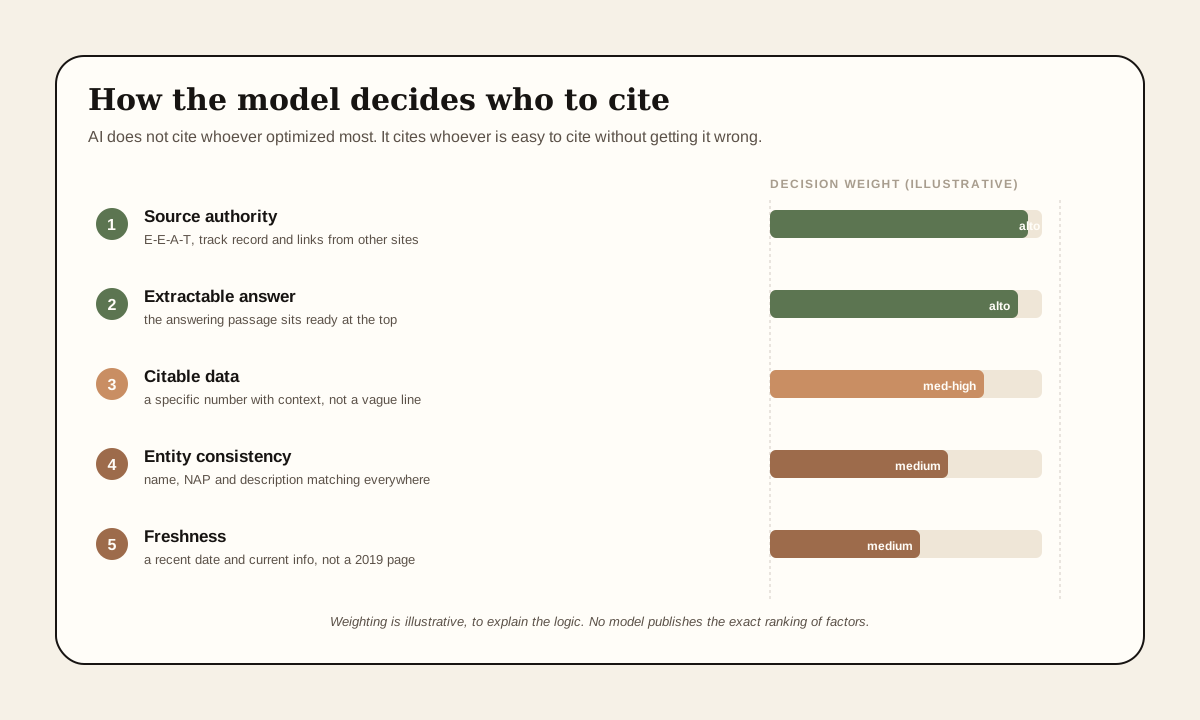
One detail almost nobody mentions: models do not cite whoever "optimized best". They cite whoever is easy to cite without risk of getting it wrong. Picture a rushed intern assembling a summary: they will grab the source that looks reliable and already hands over the finished sentence, not the one that demands digging.
SEO, GEO, AEO, LLMO: what changes with each acronym
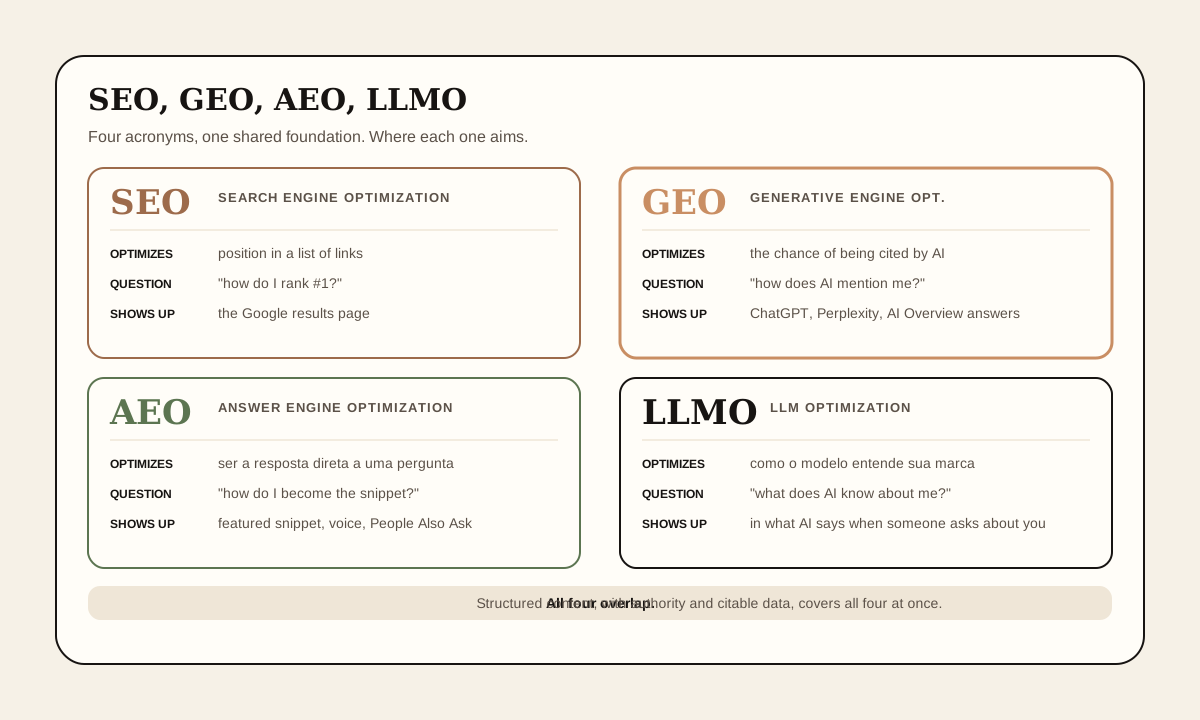
An alphabet soup showed up over the last two years and it is easy to get lost. The difference between them is less dramatic than LinkedIn posts make it sound, but it is real.
| Acronym | What it optimizes | Question it answers | Where it shows |
|---|---|---|---|
| SEO | Position in a list of links | "How do I rank #1?" | Google results page |
| GEO | The chance of being cited by AI | "How does AI mention me?" | ChatGPT, Perplexity, AI Overview answers |
| AEO | Being the direct answer to a question | "How do I become the snippet?" | Featured snippet, People Also Ask, voice assistants |
| LLMO | How the model understands your brand | "What does AI know about me?" | What the model says when someone asks about you |
In practice the four overlap: good SEO helps GEO, AEO (answering the question directly) is nearly a slice of GEO, and LLMO is the brand layer under all of it. If you make structured content with authority and citable data, you are covering all four at once. The acronyms organize the conversation; they do not become four separate projects.
If you want the conceptual part in detail, our GEO post covers the five principles. Here we stay on the how.
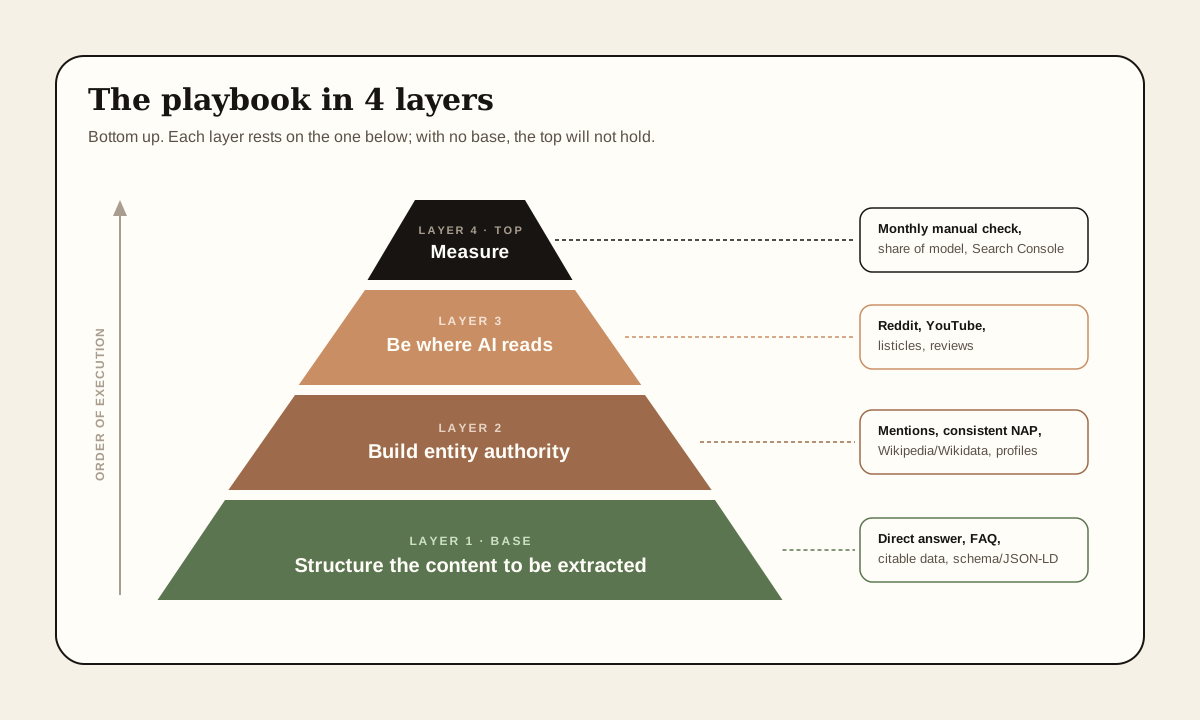
The real playbook, in 4 layers
You can organize the work in four layers, bottom up. Each one rests on the one before.
Layer 1: structure the content to be extracted
This is where most people start and where the quick return lives. The goal is making each page easy to read for a machine with no patience:
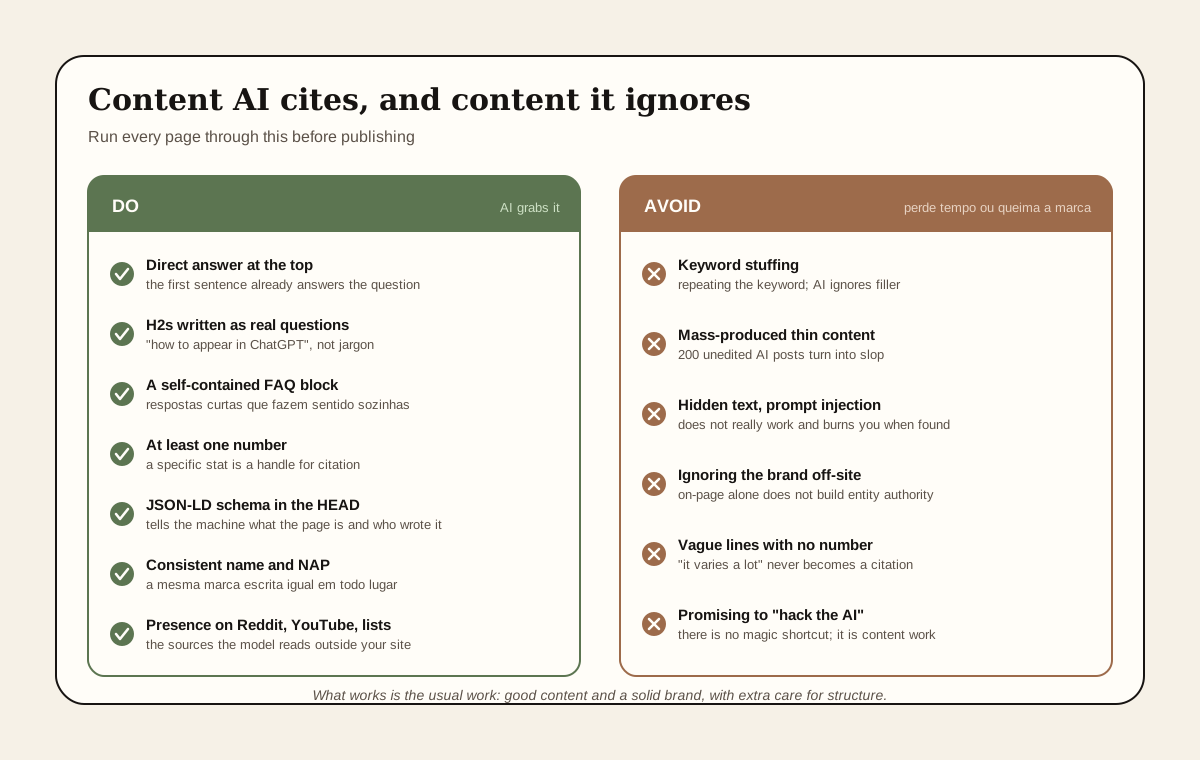
- A direct answer in the first paragraphs. They asked "how much does X cost", the first sentence answers "X costs between this and that", no suspense.
- Question-shaped structure. H2s written as the questions people actually ask. "How to appear in ChatGPT" ranks better than "AI visibility strategies".
- A FAQ at the end. A block of short, self-contained questions and answers. It is the format AI most likes to extract, and it feeds the site's FAQPage schema (which helps in Google too).
- Citable data. Every specific number is a handle for AI to grab. If you have first-party data, from your own operation or your clients, better still, because nobody else has it.
- Schema and JSON-LD. The structured data block in the HEAD that tells the machine "this is an article, written by this person, about this subject". We wrote a guide on JSON in marketing explaining why that little piece of code changes who AI cites.
Layer 2: build entity authority
Good content alone is not enough if the AI is unsure who you are. Entity authority is getting the model to recognize your brand as something real, consistent and trustworthy:
- NAP and name consistency. Name, address, phone and description identical everywhere. "Koko", "Koko Agency" and "Agency Koko" scattered without a standard leave the model unsure.
- Mentions on other sites. Being cited in publications, partner blogs, vendor lists. A mention counts as a signal that you exist, even without a link.
- Wikipedia and Wikidata, where it fits. Not for everyone, there are notability criteria. But if the brand is relevant enough to warrant an entry, it becomes one of the most trusted sources AI has about who you are.
- Filled-in profiles. Company and founder LinkedIn, Google Business, Crunchbase where it makes sense. That is where the model cross-references to confirm the entity.
Layer 3: be where AI reads
Models do not only read your site. A good share of what they use as sources comes from places you do not control, and where the conversation carries more weight precisely because it is not you talking about you:
- Reddit and forums. OpenAI and Google signed data deals with Reddit. Threads where your category gets discussed carry high weight. Spamming does not work (the community smells it from a mile away). Take part when you have something to say.
- Listicles and comparisons. "Best martech agencies in Canada", "X vs Y". AI loves extracting from lists. Being on a good third-party list is worth more than ten posts on your own blog.
- YouTube. Video transcripts are a source. A video answering your category's question enters the index AI reads.
- Reviews and testimonials. Google, review platforms in your niche. They feed the perception that the brand is legitimate.
Layer 4: measure
Without measurement you are in the dark, guessing whether anything worked:
- Ask manually. The simplest way: open ChatGPT, Perplexity and Gemini and ask what your customer would ask. Note whether you show up, in what position, with what description. Repeat monthly.
- Tracking tools. There are already tools monitoring brand mentions in AI (share of model, AI visibility). They scale what you would do by hand.
- Search Console. Searches shaped like AI questions start showing up there. It does not measure citations directly, but it signals that people coming from AI are arriving.
What does not work (and wastes your time)
Before the list, a warning: nearly every shortcut promising to "hack the AI" is wasted time or a foot-gun.
- Keyword stuffing. Repeating the keyword fifty times on the page. It worked poorly in 2010 SEO, and works worse with AI, which understands context and ignores filler.
- Mass-produced thin content. Publishing 200 posts of 300 words spat out by AI with no editing. The model recognizes generic content and does not cite it, Google penalizes it, and you flood your own site with slop.
- Trying to trick it with hidden text. Prompt injection on the page, white text on white background, instructions hidden for the model. Besides not working reliably, it is the kind of thing that burns the brand when someone finds it.
- Ignoring the brand off-site. Believing you can win on on-page alone while the rest of the internet says nothing about you. Entity authority does not get solved indoors.
How Koko works on this
With clients we treat this as part of the content operation, not a side project: page structure in the format AI extracts, an entity authority plan (mentions, profiles, brand consistency), presence in the sources models read, and monthly citation measurement alongside the rest of brand tracking. If you want to understand where your brand sits on that map today, worth talking to us.
FAQ
How do I get my company to appear in ChatGPT? You need three things together: structured, extractable content, brand authority (mentions, name consistency, filled-in profiles) and presence in the sources AI reads, like Reddit, YouTube and comparison lists. There is no paid ad for a ChatGPT answer in 2026; it is content and reputation work, paying off in weeks to months, not days.
Can I pay to appear in ChatGPT? Not as an ad inside the answer, not yet. ChatGPT shows organic search sources, not paid slots. The path is investing in content, authority and presence in the right sources, the equivalent of organic SEO. Anyone promising to "put your brand in ChatGPT" for a fee is selling smoke.
How long until AI starts citing me? It depends how much authority your brand already has. A site with a track record and good reputation sees citations within a few weeks of structuring content properly. A new brand, with no mentions and no external presence, takes a few months, because the slowest part is building entity signals outside your own site.
What is the difference between SEO and GEO? SEO optimizes for position in a list of links on Google. GEO optimizes for the chance of your brand being cited inside an AI-generated answer. The two support each other: content with a good SEO base tends to get cited more by AI. The practical difference is that GEO cares less about being first and more about being the source that is easy to extract.
Do I need schema and JSON-LD to appear in AI? It helps, it is not mandatory. JSON-LD is the structured data block telling the machine what the page is, who wrote it and what it covers. That lowers the chance of AI misunderstanding your brand and raises the chance of appearing in rich results. Pages without schema still get cited, but you make the model work harder to guess.
How do I know whether ChatGPT already cites my brand? The manual way is opening ChatGPT, Perplexity and Gemini and asking what your customer would ask, noting whether you appear and how. Repeat monthly to watch it move. There are also AI mention monitoring tools (share of model) that automate this across many questions at once.
Does Reddit really matter for appearing in AI? It matters a lot. OpenAI and Google signed data access deals with Reddit, and threads where your category gets discussed carry high weight as a source. Taking part by answering questions when you have something to say is worth more than any attempt to plant a mention, which the community detects and buries.
Conclusion
The part that bothers anyone looking for a shortcut: appearing in ChatGPT is not a hack, it is the consequence of doing work that was already worth doing. Content that answers the question, a brand other people mention, presence where your category gets discussed. What changed in 2026 is that this work now has a new return: being the source AI picks when someone asks.
My bet: over the next two years, the fight to be cited by AI gets as contested as the fight for first position on Google already was. Anyone waiting to "see how it plays out" will find their competitors already became the default sources, and dislodging a default source costs a lot more than getting there first.
You do not have to do it all at once. Start with layer 1, content structure, which pays back fastest, and work up.
Read next
- GEO: how to get your brand cited by ChatGPT and Google AI · the conceptual base, the five GEO principles
- What JSON is (and why marketing needs to read it) · the schema behind the citation
- Search Console now measures Instagram, TikTok, X and YouTube · measuring what search already brings you
- How AI is replacing traditional CRMs · AI applied to sales, not just discovery
Sources and references
- OpenAI · ChatGPT usage figures and how in-product search works
- Google Search Central · structured data and AI Overviews documentation
- Search Engine Journal · coverage of GEO, AEO and AI search
- Schema.org · the official structured data vocabulary
- Perplexity · an answer engine that always shows its cited sources
This is Koko's point of view on how to appear in AI search in 2026. If you want to audit a page or understand where your brand sits on that map, talk to us.